
Author: Dianne DeLongchamps
Which lawn pests actually show up in Northern Colorado lawns?
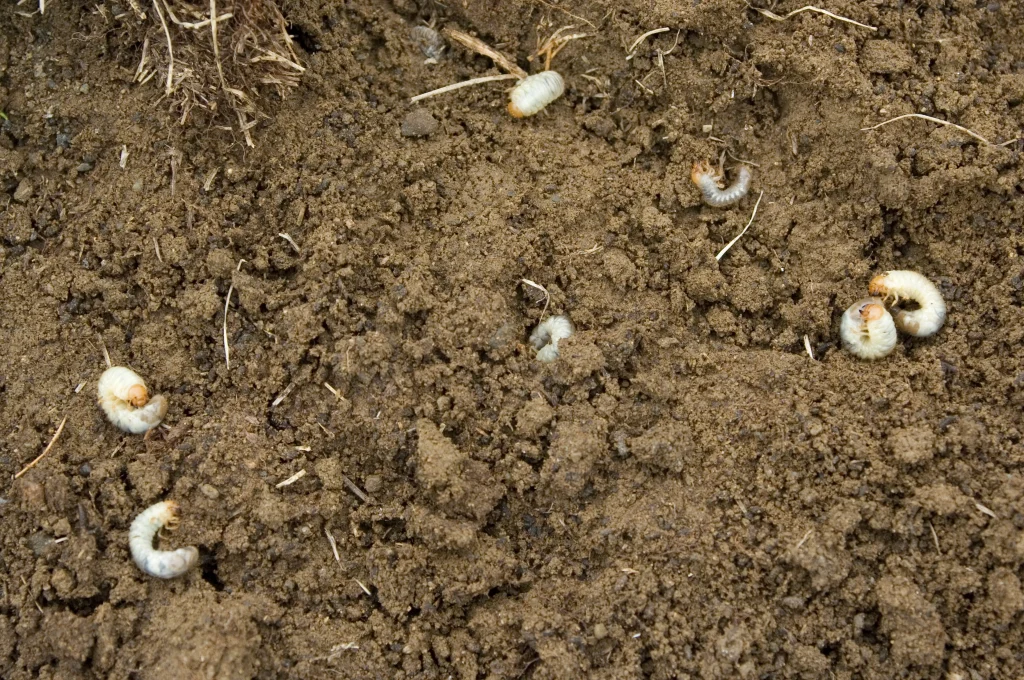
White grubs, mostly. CSU Extension is direct about it: “White grubs are the most damaging insects that occur in Colorado.” That matches what we find across Fort Collins, Windsor, and Timnath.
Grubs are the pest Luke actually deals with on Clean Air Lawn Care routes across Fort Collins, Windsor, and Timnath. Other lawn insects are uncommon here, so we confirm before we treat. Most calls turn out to be a mowing or watering problem. The baseline we give every customer: never cut below 3 inches, 3.5 in July and August. Water 1 to 2 inches a week, across two to three deep waterings.Most pests national lawn content warns about aren’t your problem here, and CSU says so:
- Billbugs — CSU PlantTalk 1514: “Billbugs are relatively uncommon in Colorado lawns.”
- Chinch bugs — CSU: “Chinch bugs are uncommon in Colorado; however the hairy chinch bug is a documented pest of turfgrass in some parts of the state, including the Denver area and Tri-River counties of the West Slope.” Northern Colorado is not on that list.
- Sod webworms — this one’s different, and we’ll be honest about it below.
And there’s a good chance your problem isn’t an insect at all.
What else causes brown patches in a lawn?
Check these first. They explain most of the brown patches we get called about.
Necrotic ring spot. CSU PlantTalk calls NRS “the most common lawn problem in Colorado.” More below, it’s the one most mistaken for grubs.
Mowing too short. The most common self-inflicted problem here. CSU: mowing under two inches “can reduce drought and heat tolerance, and cause a higher incidence of insect, disease and weed pest problems.”
Dull mower blade. Torn tips brown out in stripes people mistake for disease. CSU: sharpen “after every third mowing, or, at the least, once a month.”
Sprinkler coverage gaps. Brown that lines up with a zone edge is an irrigation problem.
Compacted clay. CMG GardenNotes #210 calls soil compaction “the primary factor limiting plant growth in landscape soils.”
How do I check my lawn for grubs?
Grubs feed on roots just below the surface. CSU 5.516: “peak injury occurs in late summer and early fall.”
Cut a flap, three sides of a 12-inch square, pried back, and look at the top 1–3 inches for CSU’s “fat, C-shaped, whitish grubs.” CSU’s threshold: “On drought-stressed turf, populations of nine or more grubs per square foot can produce visible injury.”
Watch for diggers. CSU: heavy infestations “attract mammals, such as skunks, that damage grass when digging to feed on grubs.”
Treatment timing is a separate question, mid-July to early August. See When Should I Treat for Grubs in Colorado?
Is it grubs, or is it lawn fungus?
You’ll see this rule everywhere: if the turf lifts like carpet, it’s grubs; if it stays rooted, it’s fungus.
It’s wrong here, and wrong about the most likely disease.
CSU 2.900 describes necrotic ring spot, the most destructive disease of Kentucky bluegrass in Colorado as causing “extensive root and crown discoloration and rotting.” NRS is a root rot. Lifting turf tells you the roots are gone, not what took them.
How to tell them apart: cut the flap and look. C-shaped white grubs in the top few inches means grubs. No grubs, plus dark rotted roots and crowns, points at NRS.
Shape helps too. CSU describes NRS as rings “about one foot in diameter” in a “doughnut or frog eye pattern”, grass at the margin dies and mats while grass inside stays green. Older patches often show “a bright yellow ring.”
Are sod webworms a problem in Northern Colorado?
CSU PlantTalk calls the sod webworm “one of the most common lawn insect pest in the Rocky Mountain region.” Colorado’s two turf species are the cranberry girdler and the vagabond crambus. CSU says overwintered larvae do the greatest damage, with a second generation feeding in July and August.
Luke’s honest read on his own routes: he doesn’t run into them often around Fort Collins. We’re not going to pretend CSU agrees with us, Rocky Mountain region covers a lot of ground, and CSU’s entomologists see a much wider sample than one crew does.
So: worth knowing, worth checking, and if you find them you’ve found something real.
CSU’s tells: small brown patches of “closely clipped” grass that look “scalped or grazed.” Small tan moths flying up in zigzags at dusk. And a secondary sign CSU flags — birds probing the soil for caterpillars, leaving “unsightly holes in turf.”
CSU’s test: one to two fluid ounces of liquid dish soap in a gallon of water, poured evenly over one square yard. Webworms rise within about 10 minutes. CSU’s threshold: 15 or more larvae per square yard in healthy turf, or 5 in stressed turf.
What do billbugs and chinch bugs look like?
CSU calls both uncommon here. Recognize them anyway.
Billbugs. CSU identifies the Rocky Mountain billbug (the “Denver billbug”) as the more common of the two Colorado species. Egg-laying “occurs throughout most of the growing season, peaking in June and July,” and larvae “feed throughout spring.” The tells: “a highly characteristic excrement around the base of the plants, which is generally similar to sawdust,” and stems “easily detached at the soil surface” whose ends “show evidence of ragged chewing.” Ragged chewing is what separates billbug damage from a stem that simply snapped. And by late summer, billbug damage is aftermath, if you’re seeing it in August, check in June next year.
Chinch bugs. CSU describes “irregular patches of turf turning yellow and brown,” sometimes with a purplish tint — and warns the damage “resemble[s] drought stress, turf diseases, or feeding injury from other insect pests,” which is why it gets misdiagnosed. CSU’s test: soften the soil with water, push a coffee can with both ends removed 2–3 inches into the ground with about 4 inches standing above, fill with water, wait about five minutes. Chinch bugs float up. CSU’s threshold: more than 25 per square foot before treating.
How does Clean Air Lawn Care handle pest pressure?
We confirm before we treat, and only at levels that warrant it. Blanket-treating for pests a lawn doesn’t have costs money, fixes nothing, and works against the soil biology that keeps a lawn resilient. CSU puts it well: “Lawns that are adequately watered and in good condition can often tolerate much of the injury caused by these insects.” That’s the argument for building the lawn instead of spraying it
We could have written the same twelve-pest listicle everyone else has. Instead we went and read what CSU actually publishes about Colorado, and most of that list turned out not to apply here. If you’ve got a patch you can’t explain, cut a flap and look — and if that doesn’t answer it, call us and we’ll come out.
Clean Air Lawn Care Northern Colorado is owned by Dianne, Paul, and Luke DeLongchamps — a family business serving Fort Collins, Windsor, and Timnath with organic lawn treatments and solar-powered electric equipment.

