
Author: Dianne DeLongchamps
How do I tell whether voles or pocket gophers are damaging my lawn?
Look at what the animal leaves behind. PlantTalk Colorado says voles leave runways 1 to 2 inches wide through matted grass, with open holes and spongy soil from burrowing. Pocket gophers leave fan-shaped to round mounds of soil, usually with no visible hole, and they spend most of their lives underground.
CSU Extension’s Managing Voles in Colorado fact sheet says the meadow vole lives in damp marshy areas, wet meadows, and riparian corridors, and the prairie vole lives in grasslands and along streams and irrigated lands in eastern Colorado. The fact sheet says voles often damage lawns and golf courses. Luke DeLongchamps, one of our owners, says voles tend to show up in newer neighborhoods or neighborhoods that border green space.
This guide is written for lawns in Fort Collins, Windsor, and Timnath, and it relies on what CSU Extension and PlantTalk Colorado say about each animal. Clean Air Lawn Care is happy to take a look if the clues on your lawn are hard to read.
Rule out the other diggers first
PlantTalk says four main types of burrowing animals cause damage in Colorado lawns, gardens, and pastures: voles (eight species), pocket gophers (four species), prairie dogs, and Wyoming ground squirrels. PlantTalk says the first step to solving the problem is figuring out which animal, or animals, caused the damage.
CSU Extension’s fact sheet on determining species by burrows and damage says moles are rarely found in Colorado, and only on the eastern plains. Outside that area, the animal causing the damage is likely one of the other four.
Prairie dogs and Wyoming ground squirrels are frequently seen above ground. PlantTalk says voles and pocket gophers are among the most common. CSU Extension adds that prairie dog mounds may be dome or crater shaped, and that Wyoming ground squirrel burrows stay open. Neither of those matches the closed, fan-shaped mounds that pocket gophers build.
What a vole looks like
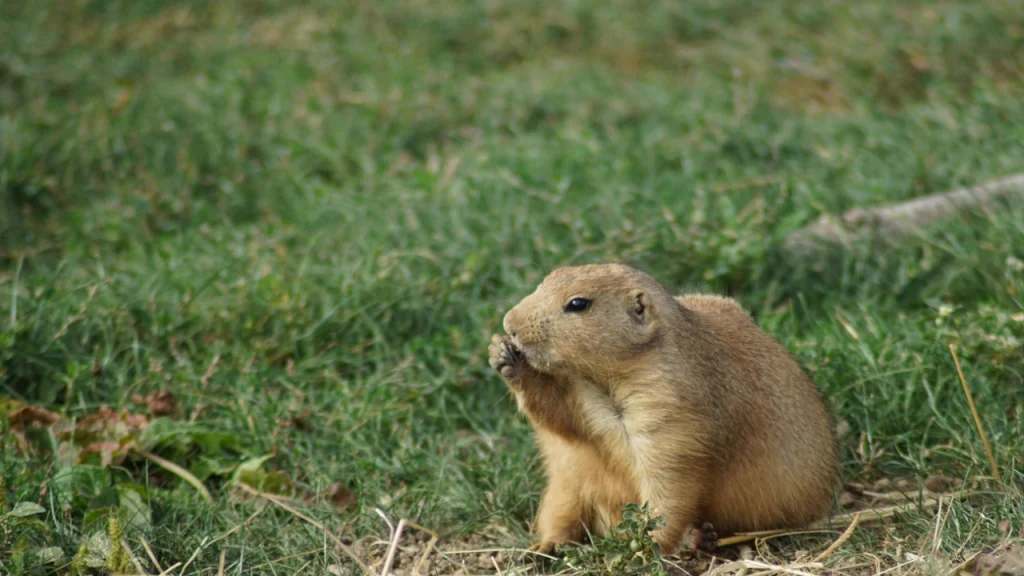
CSU’s fact sheet on managing voles in Colorado says voles are small rodents that measure 4 to 8.5 inches long, weigh 0.8 to 3 ounces, and range in color from brown to gray. They are pudgy, with blunt faces, small eyes, and small ears that are sometimes hard to see. Their tails are generally short, although the long-tailed vole is an exception. Voles are easily confused with mice, but CSU says they have short, stocky bodies and blunt heads that are more compact than a typical mouse. PlantTalk says meadow voles and prairie voles are common along the Front Range, which includes Fort Collins.
CSU also says voles are active day and night throughout the year and do not hibernate, so a vole problem does not pause when the weather turns cold.
Signs of voles
CSU says to look for runways 1 to 2 inches wide through matted grass, open holes 1 to 2 inches across, and spongy soil from burrowing. Voles build many surface runways and underground tunnels with numerous burrow entrances. PlantTalk says most vole damage occurs in winter, when voles move through their grass runways under the protection of snow. PlantTalk’s page on vole damage in yards describes trails across a lawn, and sometimes dead junipers or other shrubs, once the snow is gone.
On shrubs and young trees, gnaw marks can point to other animals, so CSU lists how to tell them apart. Vole damage is girdling and patches of irregular gnaw marks about 1/16 to 1/8 inch wide. Rabbits clip stems at a smooth 45-degree angle and leave wider gnaw marks. Deer leave a rough, jagged edge on browsed stems.
Signs of pocket gophers
Pocket gophers rarely appear above ground. CSU says they spend most of their lives in burrows, and that there is only one gopher per burrow except during breeding season. CSU says the mounds they build are fan-shaped to round and usually have closed entrances. CSU’s fact sheet on managing pocket gophers describes fan-shaped mounds 12 to 18 inches wide and 4 to 6 inches high, and says a circular plug or depression in a mound marks a lateral tunnel.
When the snow melts in spring, you may see eskers, which are solid tubes of soil above ground. Plants that wilt suddenly can also point to a pocket gopher, because the animal damages roots. PlantTalk says their tunnels are usually 2.5 to 3.5 inches wide and sit in the top 4 to 18 inches of soil.
| Clue | Voles | Pocket gophers |
| What you see on the lawn | Runways 1 to 2 inches wide through matted grass, with open holes | Fan-shaped to round mounds of soil with closed entrances |
| After the snow melts | Trails across the lawn | Eskers, which are solid tubes of soil |
| Soil | Spongy from burrowing | Tunnels 2.5 to 3.5 inches wide in the top 4 to 18 inches |
| Plants | Gnawed bark and girdling on trees and shrubs | Suddenly wilting plants from root damage |
How to repair vole damage in spring
PlantTalk says damaged lawns usually recover as the weather warms in spring. If the injury is severe, PlantTalk says to fill in the runways with compost, rake the area smooth, fertilize, and water it. CSU’s vole fact sheet gives the same basic repair for runway damage: rake, fertilize, and water the affected area. Extensive areas may need reseeding.
If the lawn needs overseeding, PlantTalk says mid-April is the time, and it says scattering seed over damaged turf is ineffective. Work the soil first so the seed makes good contact with it.
Where to find control guidance
CSU’s fact sheet on managing voles covers other control methods, and PlantTalk points homeowners with pocket gophers to CSU’s separate fact sheet on managing pocket gophers. The steps for keeping voles out of your yard before winter are in our post on preventing vole damage this fall.
If your lawn has runways, mounds, or patches you cannot explain, we’re happy to take a look.
Clean Air Lawn Care Northern Colorado is owned by Dianne, Paul, and Luke DeLongchamps — a family business serving Fort Collins, Windsor, and Timnath with organic lawn treatments and solar-powered electric equipment.

