
Core Lawn Aeration for Stronger Roots
Over time, foot traffic, pets, mowing, and everyday use pack your soil down until water, air, and nutrients can’t reach the roots. Core aeration pulls small plugs of soil out of your lawn to open it back up, so your grass can breathe, drink, and grow deeper roots. Paired with overseeding and our organic fertilization, it’s one of the best things you can do for a thin or tired lawn.
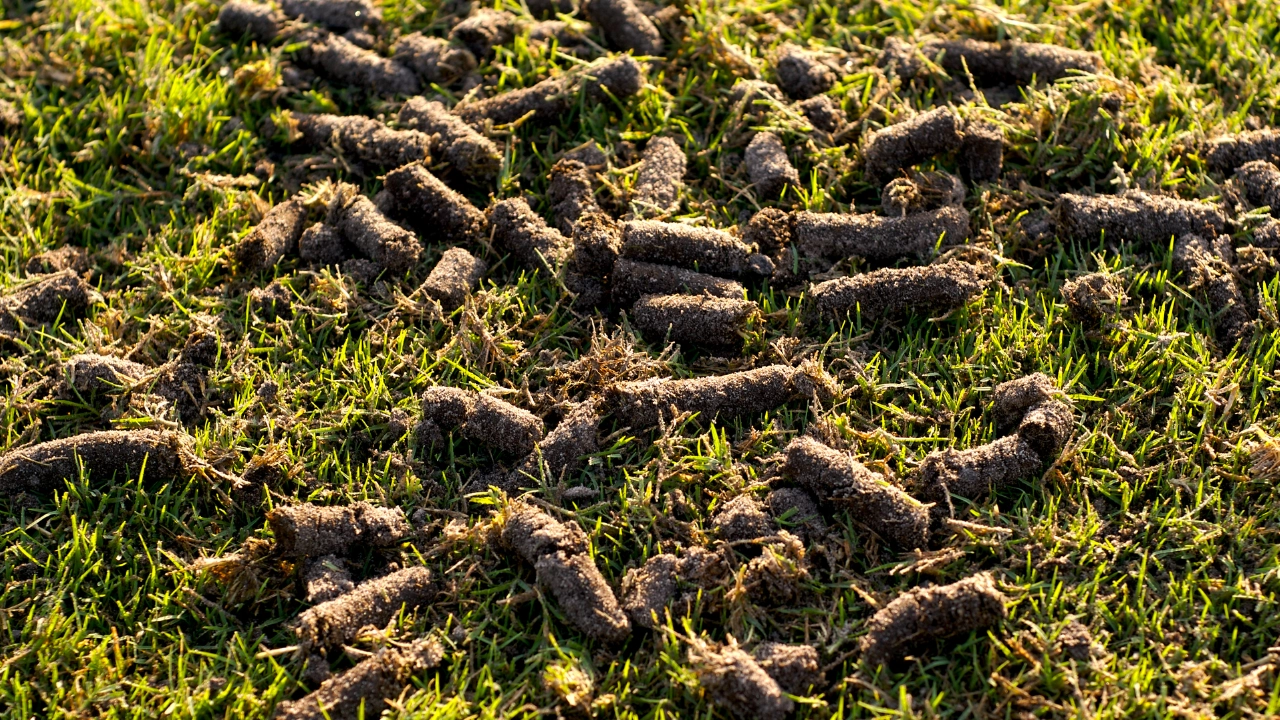
How Core Aeration Works
-
Inspect the lawn
We check your soil, thatch, and high-traffic spots to decide the best aeration approach for your yard.
-
Prep the yard
Sprinkler heads and buried lines get marked, and the soil should be moist, not soggy, so the tines pull clean plugs.
-
Core aerate
Our aerator removes small plugs of soil across the lawn, relieving compaction and opening channels to the root zone.
-
Feed and seed
We pair aeration with overseeding, compost topdressing, or organic fertilization so the new openings go straight to work.
Why Compacted Soil Holds Your Lawn Back
Healthy soil is full of tiny pockets that hold air and water. When it gets compacted, those pockets collapse. Rain runs off instead of soaking in, roots stay shallow, and grass thins out and struggles through heat and dry spells. Newer neighborhoods often start this way, with topsoil stripped and packed down during construction, and kids, pets, and mowers keep pressing it down every season.
Core aeration breaks that cycle by physically opening the soil back up. It’s the foundation of a soil-first lawn: follow it with compost topdressing to add organic matter, organic fertilization to feed the soil, and overseeding to fill in thin spots. For lawns that need a full reset, aeration is a key step in organic lawn restoration.
What Aeration Does for Your Lawn
Aeration timing and options vary by location and grass type, so find your local team to see what’s available near you.
Relieves Compaction
Pulling plugs of soil loosens ground that’s been packed down by foot traffic, pets, and mowing.
Water Soaks In
Open soil lets rain and irrigation soak down to the roots instead of puddling or running off.
Deeper Roots
With room to grow, roots reach deeper, which helps your lawn handle heat, dry spells, and heavy use.
More From Every Feeding
Nutrients from organic fertilization reach the root zone faster when the soil is open.
A Head Start for New Seed
Overseeding right after aeration drops seed into the holes, where it gets good soil contact and steady moisture.
Helps Manage Thatch
Soil plugs left on the lawn break down and bring soil life up into the thatch layer, helping it decompose naturally.
What Customers Say About Our Aeration
★★★★★
We just started using Clean Air Lawn Care a few months ago and have been SO happy and satisfied with their service so far, and our lawn looks WONDERFUL. On our most recent service (aeration and seeding), Charley and Keith did a great job, were so respectful of our property and cleaned up fully after the service was done.
★★★★★
Fall update to my Summer post: Marty, completed an aeration, seeding and fertilizing of our lawn right before the hurricane rains we got the end of September. To say that our lawn is the best it has looked in 48 years is almost an understatement.
★★★★★
We have also utilized a number of their special services like aerating the lawn and having them deliver and install mulch and pinestraw for our flower and plant beds. Every experience has been excellent.
Ready to let your lawn breathe?
Tell us about your yard and your local Clean Air Lawn Care team will recommend the right aeration timing and follow-up for your grass.
Frequently Asked Questions About Lawn Aeration
What is core aeration?
Core aeration uses a machine with hollow tines to pull small plugs of soil out of your lawn. The holes relieve compaction and let water, air, and nutrients reach the roots. It works better than spike aeration, which pokes holes without removing soil and can press the surrounding soil even tighter.
How do I know if my lawn needs aeration?
Common signs are water puddling or running off after rain, grass that thins out in high-traffic areas, soil so hard a screwdriver won’t push in easily, and a thick spongy thatch layer. Lawns in newer neighborhoods and yards with kids and pets often benefit the most.
When is the best time to aerate?
Aerate when your grass is actively growing so it can recover quickly. For cool-season grasses like Kentucky bluegrass and fescue, that’s usually fall or spring. For warm-season grasses like Bermuda and zoysia, it’s late spring into early summer. Your local team will time it for your grass and climate.
How often should a lawn be aerated?
Once a year is plenty for most lawns. Heavy clay soil or lawns with a lot of foot traffic may benefit from aerating twice a year, while lawns with loose, healthy soil may only need it every other year.
How should I prepare my lawn for aeration?
Mark sprinkler heads, shallow irrigation lines, and any buried cables so they can be avoided. Water the lawn a day or two before if the soil is dry, since moist soil lets the tines pull clean plugs. Mowing a little shorter than usual beforehand also helps.
What should I do with the soil plugs?
Leave them on the lawn. The plugs break down on their own within a week or two of watering and mowing, returning soil and microbes to the surface and helping break down thatch.
What should I do after aeration?
This is the best time to overseed, topdress with compost, and feed with organic fertilizer, since everything goes straight into the open soil. Keep new seed consistently moist until it sprouts, and your local team will let you know what to do for your lawn.
Is aeration pet-friendly?
Yes. Core aeration is purely mechanical, so nothing is sprayed or applied during the aeration itself. Pets can go back on the lawn right away, though some dogs like to play with the soil plugs until they break down.