
Author: Dianne DeLongchamps
Are robot lawn mowers actually good for Colorado lawns?
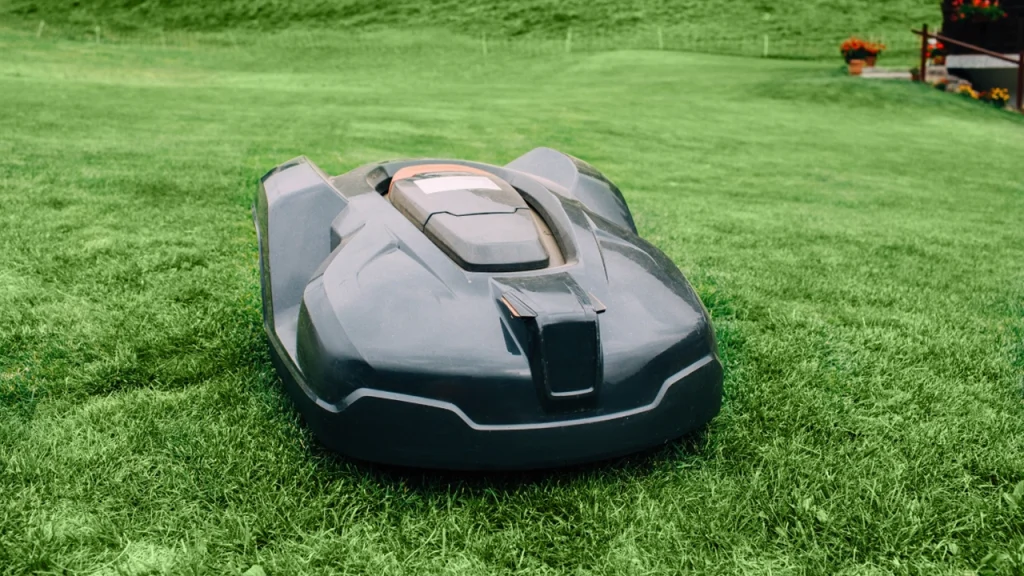
For the right yard, the research says yes on turf health. A 2026 University of Florida IFAS Extension publication found that frequent mowing promotes higher turf density and better lawn quality, and that autonomous mowers can reduce weed coverage, though clover may increase. Robot mowers only mow: they do not fertilize, treat weeds, or manage soil health.
Luke DeLongchamps, who runs field work for Clean Air Lawn Care in Fort Collins, says grubs are the main pest his team sees in lawns there. A robot mower handles the cutting, so grub control and the rest of the lawn’s care still need a plan.
Clean Air Lawn Care is an organic treatment company serving Fort Collins, Windsor, and Timnath, and Luke handles field estimates.
What the research actually shows
The IFAS publication, “Autonomous or Robotic Mower Use on Florida Lawns,” was written by Jaspal Singh, P. Agustin Boeri, J. Bryan Unruh, and Alex Lindsey and dated March 12, 2026. It says frequent mowing promotes higher turf density and improved overall lawn quality, and that a robot mower’s small, sharp blades make cleaner cuts that can reduce leaf damage and turf stress. It also says research has shown that autonomous mowers can reduce overall weed coverage compared with rotary mowers. The tradeoff the researchers flagged: creeping-type weeds, such as clover, may increase under frequent mowing, which the publication says could be acceptable if you want a mixed-species lawn.
This is a Florida publication, and its turf findings come from warm-season grasses. It reports that St. Augustinegrass under robotic mowing had more uniform turf and greater green cover, especially in spring and fall, and that zoysiagrass had higher turf quality and shoot density than with traditional mowers, though mowing took longer. It is not a study of the tall fescue and Kentucky bluegrass lawns common in Fort Collins, Windsor, and Timnath, so read the turf results as encouraging rather than proven for Colorado.
They’re electric, so the noise and emissions story is the same
Robot mowers run on batteries, which means the same points made elsewhere here apply: zero tailpipe emissions during operation, and noise levels the IFAS researchers describe as lower than gas-powered mowers. The publication also lists reduced fuel use among the advantages. If you are weighing the broader electric-versus-gas question more generally, we cover that in more depth in a separate post.
Mowing height still applies, even to a robot
Whatever is doing the cutting, the height matters. For the turf-type tall fescue and Kentucky bluegrass common in Northern Colorado, we advise never mowing below 3 inches, raised to 3.5 inches in July and August. PlantTalk Colorado’s mowing guidelines put the preferred height of Colorado turfgrass species at two inches to three and one half inches.
Check the cutting height before you buy. The IFAS publication says most autonomous mowers were designed for cool-season grasses, which are typically mowed below 2.5 inches, and it says some grasses need heights that may exceed the limits of some robotic mower models. Look for a model whose settings reach the height your lawn needs.
Cost, upkeep, and the kind of yard that fits
IFAS lists a high initial cost among the limitations of robot mowers. It also says they require regular maintenance, including battery checks and blade replacement every six to eight weeks during the growing season, and that they may leave wear patterns near the docking station. It describes the best fit as small to medium lawns with simple layouts, and says very large or complex landscapes, areas with debris or uneven terrain, and lawns that need higher mowing heights are less suitable.
IFAS also lists possible operational disruption from irrigation heads, which may cause instability, stoppage, or damage. That is worth a look if your Fort Collins yard has sprinkler heads scattered across the turf.
What a robot mower doesn’t replace
A robot mower handles cutting frequency and pattern. It does not test or feed your soil, manage weeds, or address the grubs that are the main pest issue we see in lawns here. That is the gap organic treatment fills, whether that is our weed control blend or a standard fertilization plan. Colorado State University’s Agricultural Biology department says on its white grubs page that lawns that are adequately watered and in good condition can often tolerate much of the injury grubs cause, which is another way of saying soil and turf health do real work against pests on their own, independent of whatever is cutting the grass. A well-mowed lawn on poor soil still struggles, a well-treated lawn mowed too short or too infrequently struggles too. The two jobs work together, and neither substitutes for the other.
If you have one, or you are thinking about one, and you want to know how it fits with an organic treatment plan, that is a conversation we are always glad to have.
Clean Air Lawn Care Northern Colorado is owned by Dianne, Paul, and Luke DeLongchamps — a family business serving Fort Collins, Windsor, and Timnath with organic lawn treatments and solar-powered electric equipment.

