
Organic Compost Topdressing for Healthier Lawns
Compost topdressing spreads a thin layer of high-quality, locally sourced compost over your lawn so it settles down into the soil. It adds organic matter and beneficial microbes, helps heavy clay drain and sandy soil hold water, and gives grass roots a better place to grow. It’s one of the simplest ways to build healthier soil from the top down, with no harsh or synthetic chemicals.
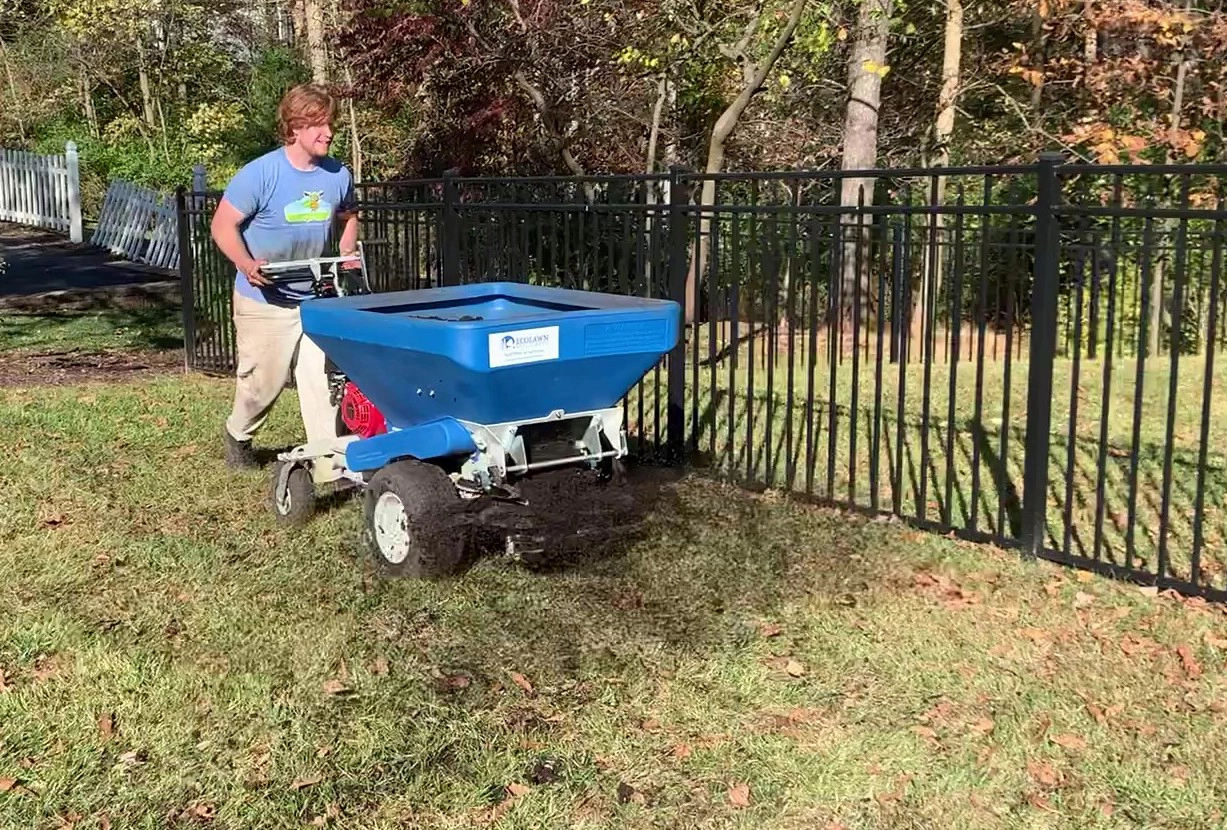
How Compost Topdressing Works
-
Assess
We look at your soil, thatch, drainage, and thin spots to decide if topdressing is the right fit and how much your lawn needs.
-
Aerate first
Core aeration opens the soil so compost can work its way down into the holes instead of sitting on top.
-
Spread a thin layer
We apply about a quarter inch or less of finished, screened compost and work it into the turf so the grass blades stay visible.
-
Water it in
Watering settles the compost into the soil. Within a week or two it disappears into the lawn and keeps working underground.
Why Your Lawn Loves Compost
Healthy lawns grow in soil that’s alive. Organic matter holds water and nutrients, gives roots room to breathe, and feeds the earthworms and microbes that keep soil loose. Many lawns, especially in newer neighborhoods where topsoil was stripped or compacted during construction, start out with very little of it. Synthetic fertilizer can green up grass on top, but it does nothing to rebuild what’s missing underneath.
Compost topdressing adds that organic matter back a little at a time. Paired with core aeration and our custom organic fertilizers (developed with Colorado State University turf and soil scientists), it builds soil that holds moisture longer, drains better after heavy rain, and grows thicker grass that crowds out weeds. Have a thin or patchy lawn? Topdressing is also a key part of our organic lawn restoration.
What Compost Topdressing Does for Your Lawn
Every lawn gets something a little different from compost. Options and timing vary by location, so find your local team to see what’s available near you.
Helps Clay Soil Drain
Organic matter loosens dense clay so water soaks in instead of puddling or running off, and roots can push deeper.
Helps Sandy Soil Hold Water
In fast-draining sandy or gravelly soil, compost acts like a sponge, holding water and nutrients where grass roots can use them.
Feeds Soil Life
Compost brings in beneficial microbes and feeds the earthworms and fungi that break down thatch and keep soil healthy.
Pairs With Aeration
Topdressing right after core aeration lets compost fill the holes and reach the root zone faster.
Lawn aeration detailsGives New Seed a Head Start
Overseeding into a fresh layer of compost gives seed good contact with the soil and steady moisture while it sprouts.
Lawn restoration detailsWorks With Organic Feeding
Our custom organic fertilizers feed your grass through the soil, and compost helps that soil hold on to nutrients longer.
Organic fertilization detailsReady to build better soil?
Tell us about your yard and your local Clean Air Lawn Care team will let you know if compost topdressing is a good fit.
Frequently Asked Questions About Compost Topdressing
What is compost topdressing?
Compost topdressing is spreading a thin layer of finished, screened compost over an established lawn. The compost settles down between the grass blades into the soil, where it adds organic matter, feeds soil life, and improves how the soil holds water and air.
Where does your compost come from?
Our compost is sourced locally. Each Clean Air Lawn Care team works with nearby compost suppliers, and we look for third-party testing and quality seals, like the US Composting Council’s Seal of Testing Assurance, when choosing a provider. That way your lawn gets high-quality, finished compost made close to home.
How much compost do you put down?
Usually about a quarter inch or less. The goal is a thin layer that settles into the turf with the grass blades still showing, not a thick blanket that smothers the lawn.
Should I aerate before topdressing?
Yes, when the soil is compacted. Core aeration pulls plugs of soil and leaves open holes, so the compost can work down into the root zone instead of sitting on the surface. Aeration and topdressing together are one of the best ways to improve tired soil.
When is the best time to topdress a lawn?
Spring and fall are the most common times, when grass is actively growing and can quickly grow up through the compost. Many homeowners pair topdressing with fall aeration and overseeding. Your local team will recommend the right timing for your grass type and climate.
Does compost topdressing replace fertilizer?
No. Compost builds soil and adds organic matter, but it isn’t a complete feeding program on its own. It works best alongside our custom organic fertilizers, which feed your grass through the soil all season.
Will the lawn smell or look messy after topdressing?
You may notice a mild, earthy smell and a darker lawn for a few days. Once it’s watered in and the lawn is mowed a time or two, the compost settles into the soil and the grass looks normal again, usually within a week or two.
Is compost topdressing pet-friendly?
Yes. Compost is a natural, plant-based soil amendment, and it’s chosen with kids and pets in mind. Some dogs love to sniff and dig in fresh compost, so it helps to keep them off the lawn until it’s been watered in.
How often should I topdress my lawn?
Once a year is plenty for most lawns. Lawns with very poor soil may benefit from topdressing twice a year for the first couple of years while organic matter builds up. Your local team will help you decide.