
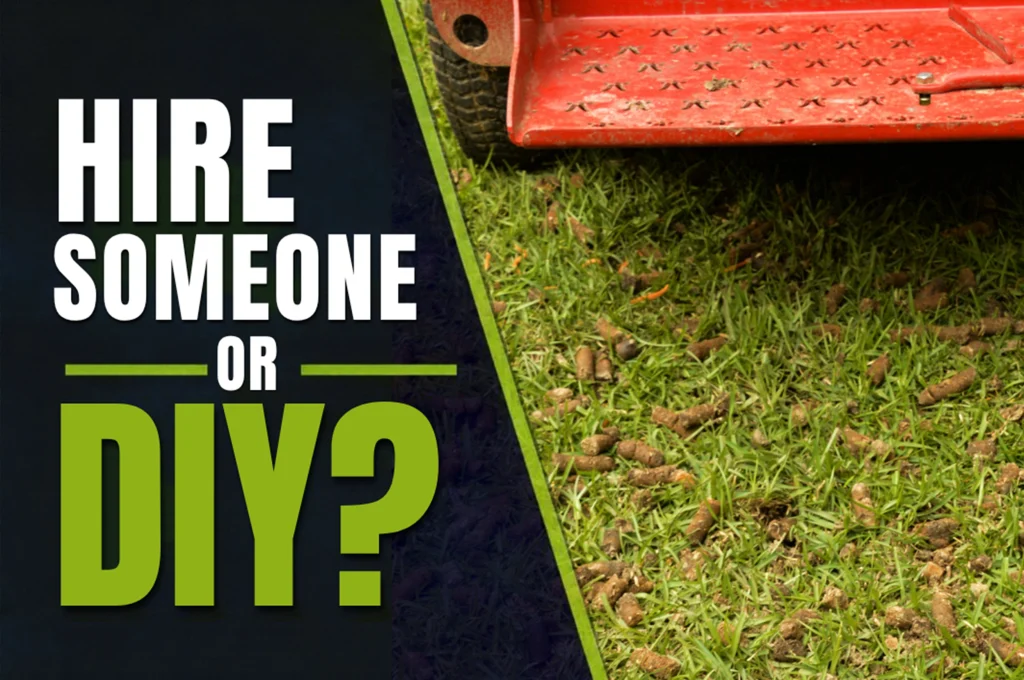
Should I aerate and overseed my lawn myself, or hire someone?
DIY aeration and overseeding is realistic for a small, flat, simple lawn, if you can handle a rented core aerator, get the seeding rate and timing right, and stay on top of the watering schedule afterward. Larger, sloped or more complex lawns tend to be harder to cover evenly with rental equipment, which is where hiring help usually pays off in coverage and consistency, not just time saved.
Luke gets asked this constantly during a site visit, and his honest answer depends on the yard in front of him more than any general rule. Clean Air Lawn Care performs core aeration, overseeding and compost topdressing as an actual service for Fort Collins, Windsor and Timnath lawns, in both fall and spring, and Luke starts every conversation by walking the property and diagnosing what it actually needs before talking through DIY versus hiring it out.
What DIY actually involves
- Renting a core aerator from a local equipment rental company, usually by the hour or half-day
- Transporting a genuinely heavy machine, which often means a truck or trailer
- Making enough passes for even coverage, since CSU’s spacing guidance of about 2 to 4 inches between holes takes more passes than most people expect on anything beyond a small yard
- Choosing the right seed and rate for your grass type: CSU turf specialist Tony Koski’s published guidelines call for 3 to 5 pounds per 1,000 square feet for Kentucky bluegrass, or 6 to 8 pounds for tall fescue
- Managing a watering schedule that shifts to several short sessions a day during germination, since inconsistent watering is one of the most common reasons DIY overseeding underperforms
Where DIY tends to fall short
Rental-grade aerators vary a lot in tine condition and spacing, and a dull or poorly maintained machine can leave uneven coverage, with some areas well aerated and others barely touched. Seed rate is the other common gap: guessing high or low on pounds per 1,000 square feet noticeably affects how the new grass fills in and holds up over the following year.
Where hiring tends to win
- Equipment that’s calibrated and well maintained for consistent core removal across the whole lawn
- Seed selection matched to your yard’s actual sun exposure and existing grass, rather than a general-purpose blend
- Accurate rates rather than eyeballing it
- Someone who can walk the property first and flag issues, like compaction, drainage or thin turf, before the work starts
What Clean Air Lawn Care brings to this conversation
Clean Air Lawn Care brings core aeration, overseeding and compost topdressing together as one fall visit for Fort Collins, Windsor and Timnath lawns, alongside our organic treatment program, soil-building fertilization, and Moose Juice, our bio-based weed blend, all built around local conditions and applied with electric equipment throughout. We also offer aeration, overseeding and compost topdressing in spring, though fall is when it does the most to set a lawn up for a stronger spring. Luke’s site visits are where the diagnosis happens, whether you end up handling the aeration and overseeding yourself or booking it with us. If you’re comparing providers, ask directly what’s included in an aeration or overseeding visit and what the seed rate and timing will be, so you’re comparing apples to apples.
When DIY genuinely makes sense
A small, flat, easy-to-access lawn, some comfort handling rental equipment, and the time to manage aftercare watering carefully are the real ingredients for a DIY job going well. It’s a reasonable choice for the right yard. It just isn’t automatically the highest-value choice for every lawn.
What a site visit with Luke actually covers
A lot of homeowners assume a site visit is just a sales pitch. It isn’t. Luke walks the property, checks soil compaction with the same screwdriver test described earlier in this series, looks at grass type, sun exposure and any thin or damaged patches, and talks through what’s actually driving the lawn’s condition, whether that’s compaction, thatch, grubs or something else. That diagnosis is useful on its own, whether you end up handling aeration and overseeding yourself, booking it with us, or pairing it with our organic fertilization and weed control program.
Questions worth asking whoever you hire
If you do decide to hire the work out, a short list of direct questions tends to separate a solid provider from a rushed one:
- What seed type and rate will you be using, and does it match my grass?
- How many passes will you make, and what’s your target hole spacing?
- Is aftercare guidance, including a watering schedule, included, or is that on me?
- What’s your timing window, and does it fit the CSU-recommended fall dates?
A provider who can answer all four specifically is generally a safer bet than one who quotes a flat price with no detail attached.inating seed, which needs the opposite: light and frequent. Getting that switch right for the first two to three weeks matters more than almost anything else in this whole process.
We’re always glad to talk through your specific lawn, whether that means booking us for aeration, overseeding and compost topdressing alongside your organic treatment program, or just giving you honest pointers if you’d rather handle the aeration and overseeding side yourself. That’s just how we like to do business as a family. Either way, getting the timing right this September is the part that matters most.
Clean Air Lawn Care Northern Colorado is owned by Dianne, Paul, and Luke DeLongchamps — a family business serving Fort Collins, Windsor, and Timnath with organic lawn treatments and solar-powered electric equipment.

