
Organic Lawn Restoration for Thin, Patchy Lawns
Organic lawn restoration brings a thin, patchy, or worn-out lawn back to life by fixing the soil first. We open up compacted ground, rebuild it with compost and organic soil builders, bring in new grass, and feed it with our custom organic fertilizers, all without harsh or synthetic chemicals. It’s pet-friendly, kid-friendly, and built to last, not a quick green-up that fades by next season.
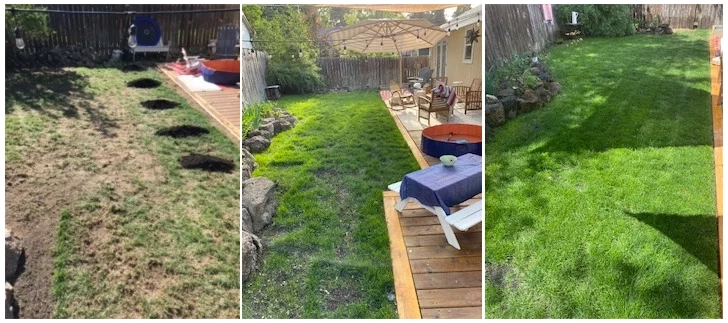
How Organic Lawn Restoration Works
-
Assess
We walk your lawn and look at soil, thatch, shade, drainage, and bare spots to find out why it’s struggling.
-
Open the soil
Core aeration loosens compacted ground, and we dethatch when a thick layer is choking the grass.
-
Rebuild the soil
Compost topdressing and our organic soil builders add organic matter and beneficial microbes.
-
Regrow
We bring in new grass with seed, sod, or plugs, matched to your grass type and climate.
-
Feed and follow up
Organic fertilizer, a simple watering plan, and a check-in visit help the new grass take hold.
Why Restore Your Lawn the Organic Way
Most thin lawns aren’t short on grass seed. They’re short on healthy soil. Compacted, low-organic-matter soil can’t hold water or feed roots, so new grass struggles and weeds move in. A conventional renovation often starts by spraying everything with harsh herbicides and finishes with a heavy dose of synthetic fertilizer. That can green things up fast, but it does nothing for the soil underneath.
We start from the ground up. Aeration and compost give roots room and food, our custom organic fertilizers (developed with Colorado State University turf and soil scientists) feed the soil life that feeds your grass, and thick new turf crowds weeds out on its own. Clean Air Lawn Care has been building healthier lawns this way since 2006. Want to keep it thriving after the restoration? Pair it with organic lawn fertilization.
What a Lawn Restoration Can Include
Every restoration is built around your lawn, so your local team picks the pieces it needs. Options vary by location, so find your local team to see what’s available near you.
Core Aeration and Dethatching
Pulling plugs of soil relieves compaction so water, air, and nutrients reach the roots. Dethatching clears the dead layer that blocks new growth.
Lawn aeration detailsCompost Topdressing
A thin layer of compost and organic soil builders adds organic matter, helps clay and sandy soils hold water, and gives new seed a great place to sprout.
Compost topdressing detailsSeed, Sod, or Plugs
Cool-season lawns are usually overseeded. Warm-season grasses that spread by runners are often restored with sod or plugs. We match the method to your grass.
Organic Feeding
Our custom organic fertilizers feed new and existing grass through the soil, so the lawn keeps thickening long after the restoration is done.
Organic fertilization detailsNatural Weed Cleanup
We knock back existing weeds with Moose Juice, our plant-based weed control, so new grass has room to fill in.
Natural weed control detailsTrees, Shrubs, and Native Plants
Bigger yard refresh? Many restoration projects also include planting trees, shrubs, or native and pollinator-friendly beds.
Native plant detailsReady to bring your lawn back?
Tell us about your yard and your local Clean Air Lawn Care team will build a restoration plan around it.
Frequently Asked Questions About Organic Lawn Restoration
What is organic lawn restoration?
Organic lawn restoration is a full reset for a thin, patchy, or worn-out lawn that fixes the soil instead of covering up the symptoms. It usually combines core aeration, dethatching when needed, compost topdressing, new grass from seed, sod, or plugs, and organic fertilizer, all without harsh or synthetic chemicals.
Do you do soil testing as part of a lawn restoration?
A soil test can be a smart first step when a lawn needs a closer look. It shows pH, nutrient levels, and organic matter, so we know exactly what your soil is missing before we add anything. Ask your local team whether a soil test makes sense for your restoration.
Do you use seed, sod, or plugs?
It depends on your grass and climate. Cool-season lawns like Kentucky bluegrass, tall fescue, and perennial ryegrass are usually overseeded into aerated, compost-topdressed soil. Warm-season grasses like Bermuda, zoysia, and St. Augustine spread by runners and are often restored with sod or plugs. Your local team will recommend the best fit.
Can a lawn restoration include trees, shrubs, or new garden beds?
Yes. Many restoration projects go beyond the grass. Depending on your local team, a restoration can also include planting trees and shrubs, adding native or pollinator-friendly beds, and tidying up the landscape so the whole yard looks refreshed.
When is the best time to restore a lawn?
For cool-season grasses, late summer into early fall is ideal because warm soil and cool air help new seed root quickly. For warm-season grasses, late spring into early summer works best, when the grass is actively growing. Your local team will schedule your restoration for the right window in your area.
How long does it take to see results?
New seed usually sprouts within one to three weeks, depending on grass type and weather. Sod and plugs start rooting in a few weeks. Most restored lawns take a full growing season to thicken up, and they keep improving as organic feeding builds the soil.
Is organic lawn restoration pet-friendly?
Yes. We use organic, plant-based products chosen with kids and pets in mind. The one thing we ask is to keep heavy foot and paw traffic off newly seeded areas for a few weeks so the young grass can take hold.
Do I need to water after a lawn restoration?
Yes. New seed needs light, frequent watering to stay moist until it sprouts, then deeper, less frequent watering as it grows. Sod and plugs need steady water while they root. We’ll give you a simple watering plan to follow after your visit.