
Author: Dianne DeLongchamps
Why does fall overseeding matter so much for Colorado lawns?
CSU Extension is direct on timing: September is a good month to overseed along the Front Range and Western Slope. Fall overseeding matters because it lines up with when cool-season grass seed germinates best, and because it gives thinning turf (worn down by a Colorado summer’s heat, dryness and pests) a real chance to fill back in before winter instead of staying bare into next spring.
Luke sees the same pattern every August across Fort Collins, Windsor and Timnath: lawns that looked full in June come out of summer noticeably thinner. Overseeding in September is the most direct way to fix that before winter sets in. This is also where our organic soil-building program comes in. New seed does better in soil that’s already being cared for than in soil left to fend for itself.
What a Colorado summer actually does to a lawn
Between strong UV at Front Range elevation, hot dry stretches, white grubs (the main lawn pest we see here) and the wear of summer use, most lawns come out of August thinner than they went into June. Overseeding in fall directly answers that thinning, filling gaps in before they turn into bare soil and eventually a spot weeds can take over.
The germination science behind the fall window
CSU’s PlantTalk program says grass seed germination can take up to two weeks, and notes it’s easier to establish cool-season grasses like Kentucky bluegrass in late summer than in spring. Late summer, when soil is warm but starting to cool, is the ideal time to seed cool-season grasses. That warm-but-cooling September soil gives seedlings a real window to root deeply before the ground turns cold. Spring-seeded grass doesn’t get that same window, since it faces Colorado summer heat almost right after germinating.
Thicker turf crowds out weeds on its own
A denser stand of grass shades the soil surface, leaving less open ground for weed seed to take hold in. That’s not a claim about any product. It’s simply what a fuller lawn does physically. It’s also part of why CSU’s fall prep guidance recommends overseeding to help a lawn outcompete next season’s weeds.
Why overseeding needs aeration to actually work
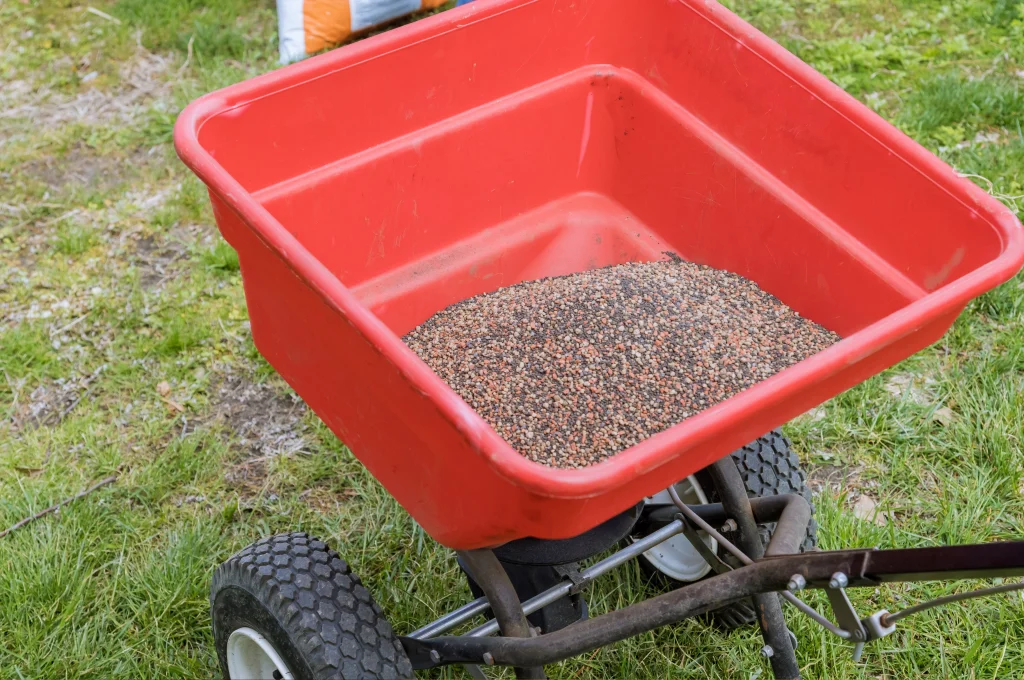
Seed sitting on top of existing grass and thatch mostly doesn’t germinate. It needs to reach bare soil. CSU’s guidance on renovating a lawn is clear that spreading seed on exposed soil, the kind aeration holes create, is what gives seed the direct soil contact it needs to sprout. That’s the practical reason aeration and overseeding get talked about together so often.
What white grubs have to do with fall thinning
Grubs are the main lawn pest we see across Fort Collins, Windsor and Timnath, and grub damage can look a lot like drought stress from a distance: thin, yellowing turf that doesn’t green back up with watering. The fall overseeding window is the same either way, but it’s worth having someone who knows the difference take a look before you seed over a spot that might actually have a pest problem underneath it.
Why we treat this as a soil program, not just a seed drop
Grass seed roots into whatever soil it lands in, so the condition of that soil matters as much as the seed itself. Our organic fertilization program is built around feeding soil biology over time instead of forcing a quick green-up: the kind of foundation that gives cool-season seedlings a real chance to root before winter. A lawn that’s been getting consistent organic feeding through the season generally has more going for it heading into a September overseed than one that hasn’t.
There’s something Luke and I both genuinely like about this stretch of the season: watching a lawn that looked tired in August fill back in by late fall. If your yard could use that kind of comeback, September is the month CSU points to for making it happen.
Clean Air Lawn Care Northern Colorado is owned by Dianne, Paul, and Luke DeLongchamps — a family business serving Fort Collins, Windsor, and Timnath with organic lawn treatments and solar-powered electric equipment.

