
Author: Dianne DeLongchamps
Xeriscaping vs. a traditional lawn: what’s the real difference?
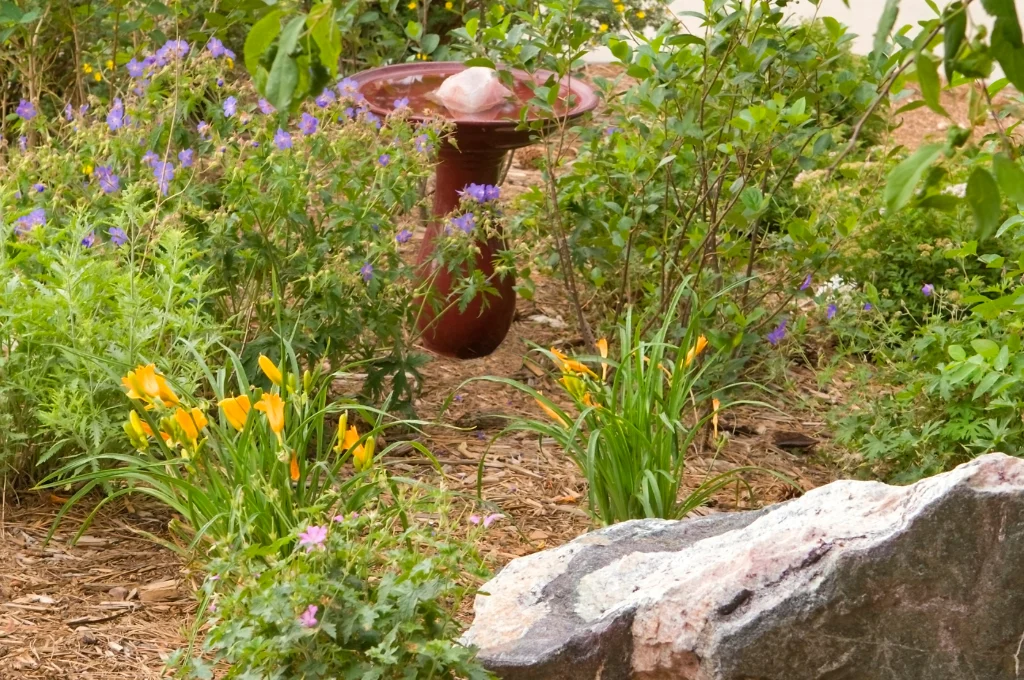
Xeriscaping is a design approach built around seven principles from CSU Extension, aimed at cutting outdoor water use. A traditional lawn is one plant, turf grass, that needs regular weekly watering to stay green all season. The real difference isn’t grass versus no grass. It’s a whole-yard design matched to water need, versus one thirsty plant covering the whole lot. Most Northern Colorado yards can use both at once.
We treat the turf side of a lot of hybrid yards across Fort Collins, Windsor, and Timnath, where a smaller, well-placed lawn of turf-type tall fescue or Kentucky bluegrass sits next to a xeriscaped bed. On the lawn side, that means a non-toxic fertilizer program and mowing height advice: never below 3 inches, and up to 3.5 inches in July and August, since the higher the grass is cut, the deeper its roots grow.
What xeriscaping actually means
CSU Extension horticulture expert John Murgel lists seven principles:
- Plan your design
- Improve your soil
- Water efficiently
- Choose drought-tolerant plants
- Limit turfgrass
- Use mulch
- Maintain your landscape
Murgel describes it as working with nature instead of against it, by picking plants that do well here with less water. He’s also clear it isn’t an all-or-nothing look. Xeriscaping isn’t about making a yard look like a desert unless you want it to. It’s about finding a balance between how a yard looks, how much water it needs, and what actually works for your life.
How much water does xeriscaping actually save?
Murgel estimates xeriscaping can lower outdoor water use by 30 to 50 percent, or more. That’s his own informed estimate as a CSU Extension expert, not a published study with a set sample size, but it lines up with what turf-replacement rebate programs across the state are built around.
Picking a different grass alone doesn’t get you there. CSU Extension’s guide on choosing turf is blunt about it: how you water matters more than which grass you plant, and switching from Kentucky bluegrass to tall fescue by itself won’t save water. The same guide shows a high-quality Kentucky bluegrass lawn using about 34 inches of water a year, dropping to about 14 inches if it’s allowed to go dormant in summer. Buffalograss, a warm-season option, needs about half the water of Kentucky bluegrass, but it also turns brown and goes dormant for much of the cool season. That’s a real tradeoff, not a free upgrade.
What a traditional lawn still offers
A lawn earns its water in ways a xeriscape bed doesn’t. It holds up to foot traffic, gives kids and pets a soft place to play, and gives a yard the clean, uniform look a lot of homeowners and HOAs still want. Because we manage lawns organically, it also operates as a true net-positive carbon sink. By completely skipping synthetic chemicals and utilizing electric equipment, the lawn actively traps atmospheric carbon deep within its root system and soil biology without the heavy emissions offset of traditional maintenance. The primary tradeoff remains that keeping it vibrant through the peak of summer requires steady, deep watering.
What a practical, smaller turf area looks like
One of the seven xeriscape principles is limiting turf grass to where you actually use it, not just where it’s there to be mowed. CSU Extension points to buffalograss as a good fit for the out-of-the-way parts of a property. It turns brown when it isn’t watered and greens back up when it is. That makes it a reasonable choice for low-use areas that don’t need to look manicured all year.
Fort Collins also runs its own Xeriscape Incentive Program: a rebate of $0.75 per square foot, up to $750, for converting turf to an eligible low-water landscape. There’s an extra $0.25 per square foot native-plant bonus, up to $1,000 total, when at least 80% of the new plants are native to Colorado. Rebates go first come, first served while funds last, so check current availability with the city before planning around it.
How Clean Air Lawn Care fits into a hybrid yard
We’re lawn treatment specialists, not landscape designers, and we don’t touch the xeriscaped side of a yard, other than trimming and some safer weed control options. What we do is keep the remaining lawn genuinely healthy on the water it’s allotted, using organic fertilization and the field standards above, so the smaller turf area in a hybrid design earns its keep.
We’ve watched more neighbors blend the two approaches, and it’s one of our favorite conversations to have with clients. If you’re curious what organic treatment could look like for the lawn part of your yard, we’re glad to walk through it with you.
Clean Air Lawn Care Northern Colorado is owned by Dianne, Paul, and Luke DeLongchamps — a family business serving Fort Collins, Windsor, and Timnath with organic lawn treatments and solar-powered electric equipment.

