
Author: Dianne DeLongchamps
How do robot lawn mowers navigate a yard, and can they handle slopes?
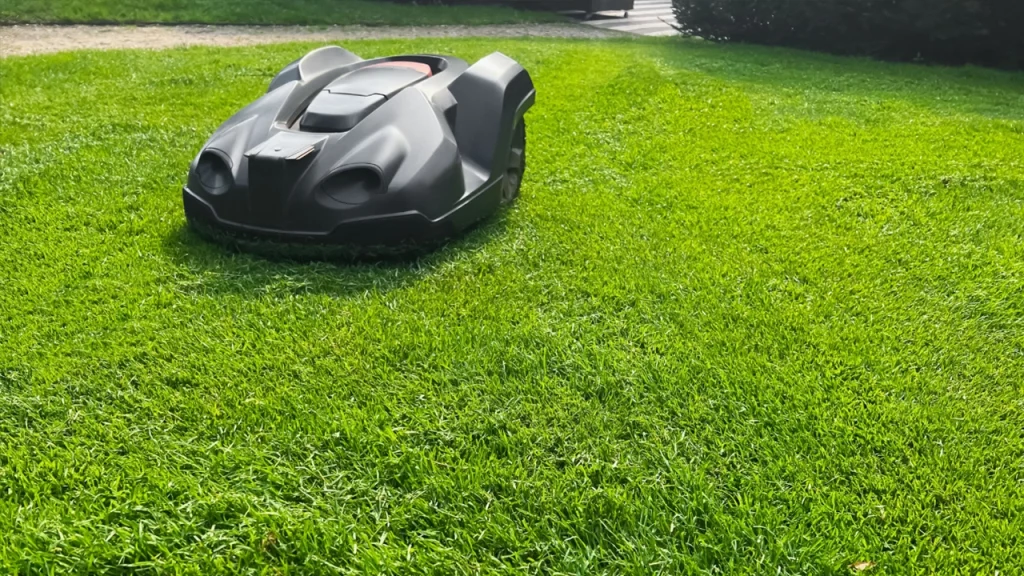
University of Florida IFAS Extension says a robot mower uses a navigation system, such as a boundary wire or GPS/RTK positioning, to define the mowing area, and it returns to a charging station on its own. The same publication does not give a slope limit. It lists uneven terrain as a poor fit.
Clean Air Lawn Care serves Fort Collins, Windsor, and Timnath. We answer this one straight, with what the research actually says instead of guessing.
Boundary wire versus GPS/RTK
The IFAS publication lists the key parts of a robot mower: the mower itself, “a navigation system, such as a boundary wire or GPS/RTK, to define the mowing area,” and a charging station where the mower docks automatically. Those are the two navigation options the publication names. It does not explain how either one works, and it does not say which one is better.
Because the publication stops there, the useful question for your yard is which system a particular mower uses and whether that system can handle your layout. The manufacturer can answer that question. A general rule cannot.
The charging station
The mower returns to its dock on its own, which means the dock location matters. IFAS notes that robot mowers “may leave wear patterns near docking stations,” and a figure in the publication shows elliptical wear patterns in the grass beside a dock. If you are choosing where to put the dock, pick a spot where a small worn patch will not bother you.
Random versus systematic mowing patterns
IFAS describes two mowing strategies. A random pattern “moves in random directions across the lawn.” The publication says this approach works well in areas with obstacles, but it may overlap and lower efficiency. A systematic pattern uses “structured, pre-planned mowing such as straight lines or grid patterns.” IFAS says this approach is more efficient in open lawns and reduces overlapping or repeated mowing in the same areas.
The publication does not say which pattern any particular model uses, so ask the seller before you buy, especially if your yard leans toward open grass or toward lots of obstacles.
Obstacles the research actually flags
IFAS says robot mowers “may struggle in complex landscapes with many obstacles.” It also points to two specific trouble spots. The first is raised beds and borders, which “often block access, leaving grass along edges to grow taller and require string trimming.” IFAS suggests lowering those edges so the mower can reach into them, which reduces the trimming you do by hand. That trimming is the part of the job a robot mower leaves for you.
The second is your sprinkler system. Among the operational considerations, the publication lists “possible operational disruption from irrigation heads, which may cause the mower to become unstable.” If your yard in Fort Collins, Windsor, or Timnath has a sprinkler system, take a look at where the heads sit before you decide where the mower will run.
Slopes: the honest, unglamorous answer
The IFAS publication does not address slopes directly. It gives no slope limit in degrees or in percent grade. What it does say is that robot mowers are less suitable for “areas with frequent debris or uneven terrain.”
If your yard has real grade to it, the manufacturer’s published rating for the specific model you are considering is the place to look, not a general assumption either way.
A safety note the research flags
Among the operational considerations, IFAS lists “lightning risk to docking stations.” The publication does not say how to protect a dock, so ask the manufacturer what protection it recommends for the charging station.
Which yards IFAS says fit best
IFAS describes robot mowers as best suited for small to medium-sized lawns, lawns with simple layouts and few obstacles, and homeowners who want reduced labor and quieter operation. It lists very large or complex landscapes, lawns that need higher mowing heights, and areas with frequent debris or uneven terrain as less suitable. In plain terms, a flat, open yard with few beds matches the best-suited description, and a yard with many beds and uneven ground is closer to the less suitable list. Either way, the manufacturer’s specifications for the model you are considering should have the final say. We cover how robot mowers affect turf health in our post on whether robot lawn mowers are good for Colorado lawns.
Questions to ask before you buy
Questions worth asking include:
- Where can the charging station go, and what does the manufacturer recommend for lightning protection?
- Does the mower use a boundary wire or GPS/RTK to define the mowing area?
- Does it mow in a random or a systematic pattern?
- What slope does the manufacturer rate this model to handle?
- How does it behave around sprinkler heads?
If you have a sloped or oddly shaped yard and you are not sure a robot mower is a fit, we would rather tell you the real answer than a convenient one.
Clean Air Lawn Care Northern Colorado is owned by Dianne, Paul, and Luke DeLongchamps — a family business serving Fort Collins, Windsor, and Timnath with organic lawn treatments and solar-powered electric equipment.

