
Author: Dianne DeLongchamps
What counts as xeriscape under Water-Wise SB23-178?
Under Colorado’s SB23-178, a qualifying water-wise option means at least 80% drought-tolerant plants, with hardscape capped at 20% of the landscaped area. That fits inside CSU Extension’s seven-principle framework for xeriscape design: planning, soil, efficient watering, drought-tolerant plants, limiting turf, mulch, and upkeep. But under the law, it’s the plant and hardscape percentages that actually decide whether a design qualifies. It is not simply gravel where grass used to be. Living, low-water plants are central to what qualifies.
This is general information about Colorado law, not legal advice for your specific property. HOA rules and city codes vary, so check SB23-178 against your own governing documents, or talk to a lawyer.
We work on the lawn side of these designs across Fort Collins, Windsor, and Timnath, not the plant beds. When a hybrid yard keeps a smaller turf area, we treat it as turf-type tall fescue or Kentucky bluegrass on organic fertilizer, with mowing height advice of no lower than 3 inches (3.5 inches in July and August).
The specific numbers water-wise SB23-178 sets
SB23-178 sets the legal floor for HOAs. The bill requires associations to “allow a unit owner an option that consists of at least eighty (80) percent drought-tolerant plantings” and bars them from requiring hardscape on more than 20 percent of the landscaping area, according to the bill text and the Colorado Division of Real Estate’s summary.
Why an all-gravel yard doesn’t automatically qualify
Since the law caps mandatory hardscape at 20% of the area, a yard converted mostly to rock, gravel, or artificial turf doesn’t fit inside what SB23-178 protects. At least 80% of the area still needs to be living, low-water plants. For HOA approval and for real water savings, the safest, most defensible conversion is plant-based, not rock-only. Local rebate programs draw the same line: the Town of Windsor’s Lawn Replacement Program requires at least 50% living plant material in a qualifying project and states plainly that “artificial turf is not eligible for this rebate.” Two different numbers, 80% and 50%, but the same underlying principle: a conversion has to be genuinely planted, not just resurfaced.
What this can look like in a Fort Collins, Windsor or Timnath yard
CSU Extension turf specialist Tony Koski says native options like blue grama and buffalograss need much less water than traditional bluegrass or fescue lawns once they’re established. He puts it at roughly 1 to 2 inches every 4 to 5 weeks to stay green in a dry summer. While the grass is getting established, Koski recommends mowing it to about 2 inches to encourage it to spread. Once it’s established, he says to mow at the highest setting, sometimes as little as once a year. That maintenance schedule is for a homeowner managing their own native lawn area. These grasses also go dormant and brown from roughly September through May, unlike traditional bluegrass, which is a real tradeoff to weigh.
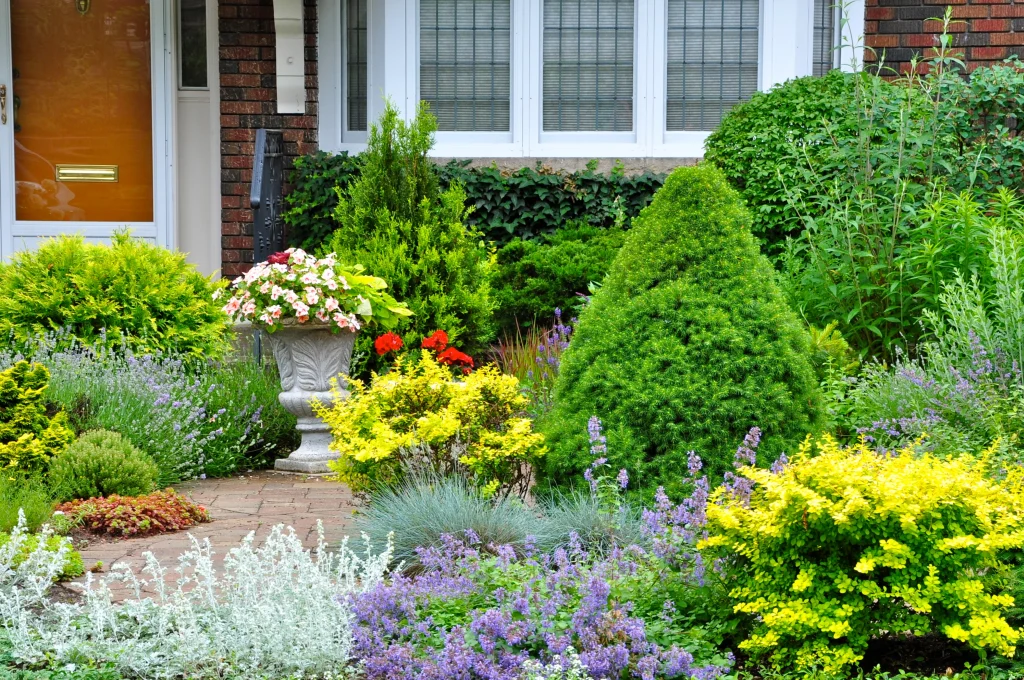
For planting beds, CSU Extension’s xeriscape plant guide lists options like lamb’s-ears, lavender, Apache plume, blue mist spiraea, and poppy mallow. Its list of drought-tolerant Colorado perennials includes prairie coneflower, little bluestem, sulphur-flower buckwheat, and blue false indigo. A well-defined lawn area of tall fescue or Kentucky bluegrass, drip irrigation for the beds, and a layer of organic mulch around new plantings rounds out a design that satisfies both CSU’s principles and the law’s numbers. Check out our post for what makes a yard in the traditional category vs. the xeriscape one.
How Clean Air Lawn Care fits into this
We’re lawn care specialists, not landscape architects. We work with the turf part of these hybrid designs, keeping it organically healthy and properly watered so it works with the water savings from the xeriscaped part, not against them.
A genuinely water-wise yard is one of the smarter long-term investments a Northern Colorado homeowner can make right now, and we love being part of that shift. If you’re weighing a conversion and want a second opinion on caring for the lawn that remains, we’re happy to talk it through.
Clean Air Lawn Care Northern Colorado is owned by Dianne, Paul, and Luke DeLongchamps — a family business serving Fort Collins, Windsor, and Timnath with organic lawn treatments and solar-powered electric equipment.

