
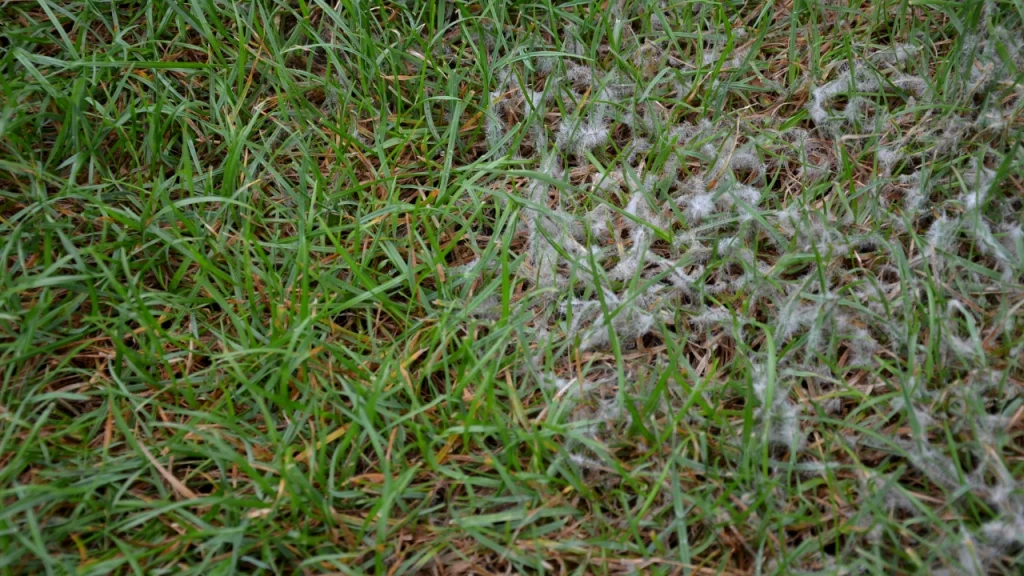
Why does my lawn have gray, matted patches right as the snow melts?
That’s almost always gray snow mold, a fungus that shows up on a lot of Front Range lawns after snow sits on the ground for a long time. CSU Extension describes it as circular patches of light yellow, straw, or brown-colored turf, with grass blades that look matted and are sometimes covered in gray or white webbing right as the snow melts. The good news: it rarely kills an established lawn, and it has nothing to do with fertilizing too late in the fall.
We see this most on spots around Fort Collins, Windsor, and Timnath that hold snow the longest, areas where snow gets shoveled onto the turf or piles up in a drift, which is exactly where PlantTalk says symptoms tend to be worse. Most lawns out here are turf-type tall fescue or Kentucky bluegrass. Luke DeLongchamps sees the same thing every spring: a rough, matted patch that looks alarming in March and fills back in on its own within a few weeks, since CSU Extension’s own research says the disease rarely kills turf in an established home lawn. The one real exception is young grass from a late fall seeding, which can actually be killed by it, though fall-planted sod is fine, which is one reason we talk timing through carefully before anyone reseeds too close to the first hard freeze.
What’s actually happening under the snow
The fungus behind snow mold is active in moist lawns at temperatures just above freezing. It does its work under the snow itself, where it’s dark, cold, and damp, not out in the open air.
Where it shows up first
Snow mold likes the spots that hold snow the longest and stay coldest and dampest underneath it. PlantTalk Colorado points specifically to areas where snow was shoveled onto the turf or where drifts formed, those spots carry extra snow cover, so the fungus gets extra time to work before it melts off. If a part of your yard regularly ends up under a deep pile from shoveling or the wind, expect it to be first in line. PlantTalk also notes that long-lasting snow cover isn’t actually all that common across the Front Range and Plains, which is part of why gray snow mold shows up here less than it does in places with a longer, steadier snowpack.
What it looks like as it dries out, and when it stops
Right after the snow melts, the patch looks moldy and matted. In bad cases it can look like a large dead area. As it dries out over the following days, it usually fades from tan to light gray or white. That fading is a normal part of the disease running its course, not a sign it’s getting worse. PlantTalk’s own guidance is that the fungus stops being active once temperatures regularly climb above 45 degrees or the turf itself dries out, though a cool, wet spring can stretch that window out a little longer than usual.
Does fall fertilizer make this worse?
No. This is the part a lot of homeowners worry about, since feeding the lawn late in the year feels like it should feed the fungus too. It doesn’t work that way. A CSU Extension turf specialist has said plainly that late-season, or winterizer, fertilizer neither encourages snow mold nor increases its severity. If anything, a well-fed lawn heals faster once spring comes. Our own fall fertilizer program uses organic, non-toxic ingredients, and we time it around what the lawn needs heading into winter, not around a fear that isn’t backed up by the research.
What to actually do about it
Once you see the matted patch, lightly rake up the dead material so air and sunlight can reach the grass underneath. That’s really it. A little spring nitrogen fertilizer helps the area heal from there. You don’t need a fungicide. The same CSU turf specialist found raking speeds recovery better than fungicide does for home-lawn snow mold.
Every March I get a call or two from someone convinced their lawn died over the winter because of a gray, matted patch by the north side of the house. Nine times out of ten it is snow mold, and it is one of the few lawn problems where the answer really is just patience and a light rake. If you want a second opinion before you do anything, Luke is happy to take a look when he is out in Fort Collins, Windsor or Timnath this season.
Clean Air Lawn Care Northern Colorado is owned by Dianne, Paul, and Luke DeLongchamps — a family business serving Fort Collins, Windsor, and Timnath with organic lawn treatments and solar-powered electric equipment.

