
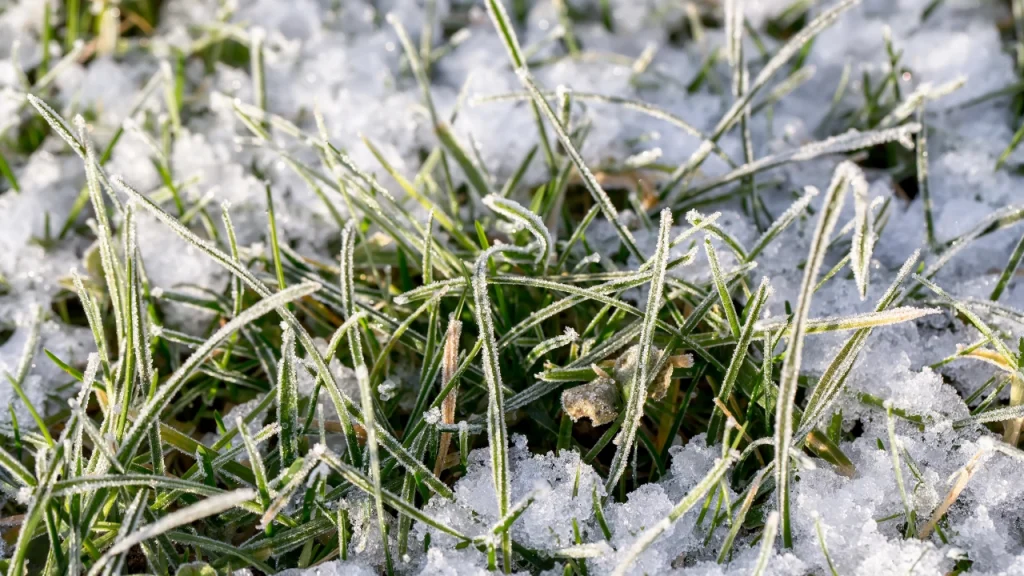
How do I tell if my lawn actually died over winter, or if it just needs more time?
Start by looking at the pattern. Tony Koski, a turf specialist with CSU Extension, says true winterkill tends to show up in specific spots: areas that went into winter dry, places with a lot of sun and wind, new sod with shallow roots, or lawn sitting under thick thatch or compacted soil. His short version: little rain plus windy, sunny, warm days is a good recipe for winter damage. Normal spring dormancy is different: it greens up on its own within a few weeks once the weather warms, pretty evenly across the whole lawn. True winterkill stays brown in that same identifiable spot while the grass around it wakes up just fine.
Luke DeLongchamps keeps the closest eye on newly sodded and newly seeded lawns heading into a Fort Collins, Windsor, or Timnath winter, because that’s exactly the pattern Koski describes: sod that looks healthy going into fall can die by spring simply because its roots never grew deep enough before the ground froze. That’s one more reason fall seeding and sodding timing matters so much around here, whether it’s turf-type tall fescue or Kentucky bluegrass, and it’s exactly why we talk timing through carefully when we handle fall overseeding for Fort Collins, Windsor and Timnath customers.
What actually causes winterkill on the Front Range
Koski points to a handful of factors that stack on top of each other, not one single cause:
- Dry, windy, sunny winter days with little rain, which dry out grass crowns that have no snow or moisture protecting them.
- Big temperature swings, cold snaps followed by warm days, which stress turf more than steady cold does.
- Thick thatch, which doesn’t hold moisture well.
- Shallow or underdeveloped roots, especially on newly sodded lawns.
- Compacted soil, which keeps roots from growing deep enough to handle winter stress.
- Mites, which do better in dry conditions, so a drought-stressed lawn can end up dealing with a pest problem on top of the weather.
Winterkill vs. normal spring dormancy
Dormant cool-season grass looks tan or straw-colored through winter, and it greens back up within a few weeks of steady spring warmth, usually across the whole lawn at close to the same pace. Winterkill looks different: a patch, a strip, or a section stays dead while everything around it turns green, usually matching a spot that was dry, windy, or newly planted. If you tug on the dead grass and it lifts up with no green underneath, even after the rest of the yard has filled in, that’s winterkill, not normal dormancy.
Should I water my lawn in winter?
On the driest, most exposed parts of the yard, yes, when the weather allows it. CSU Extension’s “Winter Lawnkill” guidance from Koski puts it this way: on a day, or two in a row, that stays above freezing, run a hose or sprinkler out to the driest parts of the yard. You’re not trying to soak the lawn, just enough to moisten the crowns of the grass and get a little water into the root zone, which helps stop those crowns and young roots from drying out. This is occasional, targeted watering on above-freezing days, not the regular weekly watering schedule we recommend during the growing season.
New sod and new seed are the highest-risk areas
If you put down sod or seed late in the fall, it’s worth keeping an eye on that spot specifically the following spring, before assuming anything about the rest of the lawn. A young root system just hasn’t had time to anchor itself the way an older lawn has, which is exactly why timing matters so much when we talk about fall overseeding and bare-spot repair.
Every spring we get a few worried calls about a dead-looking strip along a driveway or a fence line, and most of the time it turns out to be exactly what Tony Koski describes: a dry, exposed spot that just did not have the water or root depth to make it through winter. If you have new sod or new seed going into this winter in Fort Collins, Windsor or Timnath, keep an eye on it come spring, and reach out if you are not sure what you are looking at.
Clean Air Lawn Care Northern Colorado is owned by Dianne, Paul, and Luke DeLongchamps — a family business serving Fort Collins, Windsor, and Timnath with organic lawn treatments and solar-powered electric equipment.

